In surgery, precision is everything. Every incision, every decision can directly affect the surgical outcome. To achieve that level of control, surgeons rely on specialized instruments designed for specific tasks.
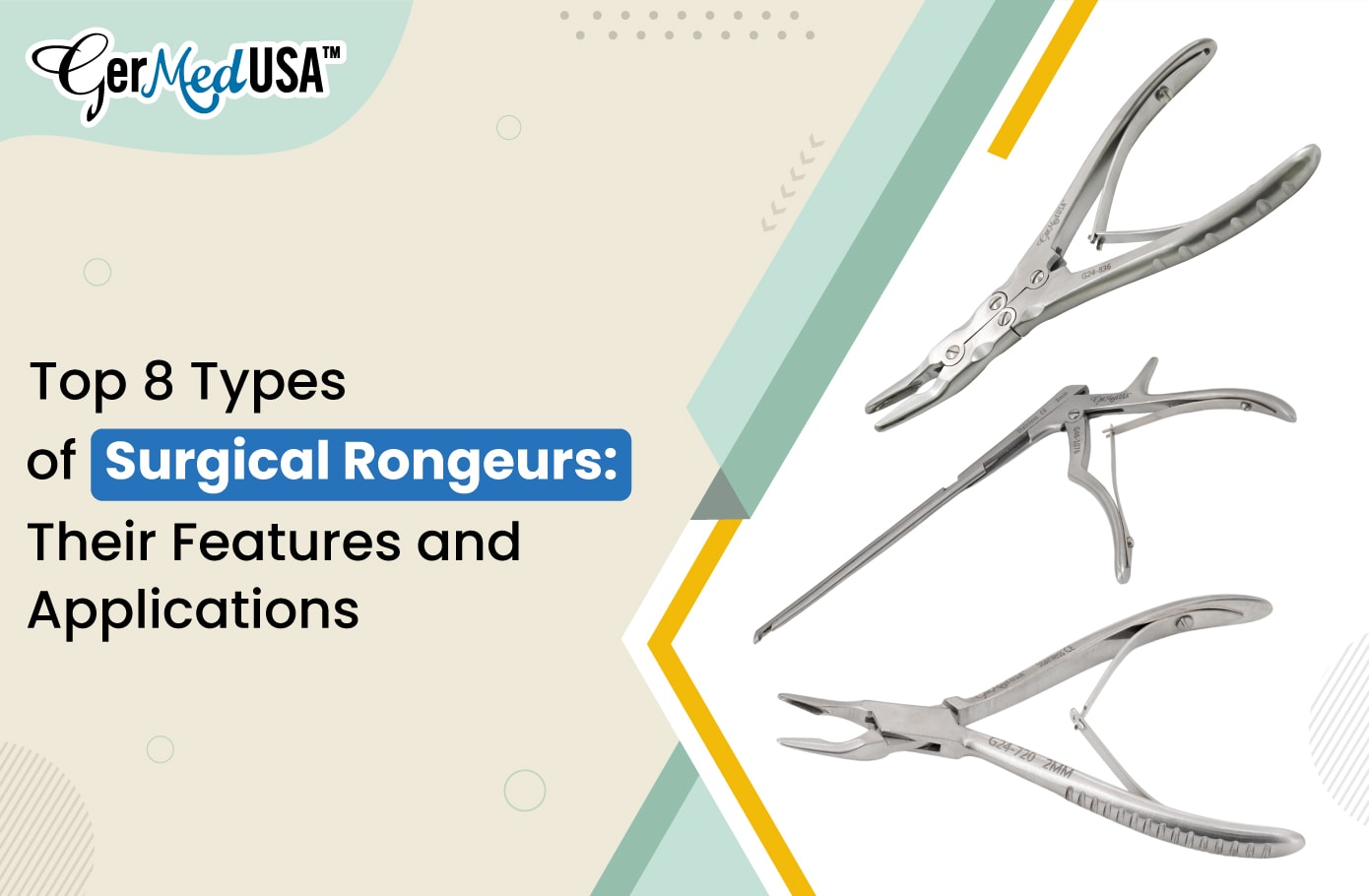
When it comes to cutting bone and dense tissue, surgical rongeurs play a key role. Rongeurs are one of many tools covered in a surgical instruments with pictures reference and are commonly used in neurosurgery, orthopedic, and spinal procedures.
In this blog, you will learn about 8 primary types of surgical rongeurs. You will also know each type's common features, applications, and instruments.
What are Surgical Rongeurs?
A surgical rongeur is a hand-held, spring-loaded instrument designed to cut and remove bone, cartilage, and dense fibrous tissue. Its sharp jaws allow surgeons to remove tissue in small, controlled steps while protecting surrounding structures. Surgical rongeurs are available in different types, each specifically designed to suit particular surgical procedures and anatomical requirements.
Essential Types of Surgical Rongeurs
Every surgical rongeur is designed for a particular usage, so it is essential for a surgeon to understand various rongeur usage and features.
Below are the 8 widely used types of rongeurs in different surgical procedures.
1. Double Action Rongeurs
Double-action rongeurs are designed for heavy-duty tasks that require significant force. Their dual-hinge mechanism amplifies the surgeon's grip strength, ensuring efficient bone cutting with reduced effort. These types of surgical rongeurs are known for their durability and smooth operation.
Features:
• Dual-hinged mechanism for enhanced cutting power.
• Stainless steel construction for corrosion resistance.
• Available in straight and curved tip designs for versatility.
• User-friendly handles for a secure and comfortable grip.
Applications:
• Ideal for orthopedic surgeries, including hip and knee replacements.
• Frequently used in spinal surgeries to remove dense bone.
• Suitable for general bone reconstruction procedures.
Common instruments include:
• Ruskin Double Action Rongeur 7” Curved – Designed for cutting dense bone with precision.
• Luer Double Action Rongeur 9” Straight – A versatile instrument for large bone removal.
• Bone Cutting Double Action Rongeur 8” Angled – Perfect for reaching angled or challenging surgical sites.
Explore top-quality double-action rongeurs at GerMedUSA.
2. Single Action Rongeurs
Single-action rongeurs are precision instruments designed for smaller, more delicate tasks. Their lightweight design and straightforward mechanism make them easy to handle in narrow or confined surgical spaces. These types of surgical rongeurs are highly effective for tasks requiring minimal force.
Features:
• Single-hinged design for direct and precise cutting.
• Compact and lightweight for ease of use in small spaces.
• Available in various tip sizes and shapes.
• Non-slip handle design for enhanced control.
Applications:
• Commonly used in neurosurgery for delicate bone cutting.
• Suitable for procedures involving small or thin bones.
• Used in various surgeries for specific bone reshaping tasks.
Instruments include:
• Luer Single Action Rongeur 6” Straight – Ideal for small bone cutting.
• Micro Rongeur 5” Curved – Designed for intricate bone removal.
• Adson Single Action Rongeur 7” Straight – Perfect for neurosurgical applications.
Browse precision-crafted single-action rongeurs at GerMedUSA to successfully perform procedures.
3. Kerrison Rongeurs
Kerrison rongeurs are uniquely crafted for spinal and neurosurgical applications. Their elongated, thin design allows surgeons to access and remove bone efficiently in confined spaces. These rongeurs are highly valued for their sharp edges and varied tip angles.
Features:
• Thin, elongated design for deep surgical access.
• Sharp, angled tips available in upward, downward, and straight configurations.
• Made of premium-grade stainless steel for durability.
• Smooth cutting mechanism for precise bone removal.
Applications:
• Used in spinal surgeries to remove laminae and bone spurs.
• Ideal for neurosurgery procedures requiring precise bone excision.
• Frequently employed in intervertebral disc surgeries.
Common instruments include:
• Kerrison Rongeur 8” Up-Bite – Designed for upward bone cutting.
• Kerrison Rongeur 9” Down-Bite – Suitable for downward bone removal.
• Kerrison Rongeur 7” Straight – A versatile tool for straight bone cutting.
Discover ergonomic Kerrison rongeurs for advanced surgical precision at GerMedUSA.
4. Leksell Rongeurs
Leksell rongeurs are robust types of surgical rongeurs designed to handle dense and large bone structures. With their strong double-action mechanism, they excel in procedures that demand significant force and durability.
Features:
• Heavy-duty design for dense bone cutting.
• Double-action mechanism for smooth operation.
• Curved and straight tip options for varied surgical needs.
• Comfortable handles for reduced hand fatigue.
Applications:
• Commonly used in orthopedic surgeries involving thick bone.
• Ideal for removing large bone fragments during joint replacement.
• Employed in spinal surgeries requiring heavy-duty bone removal.
Instruments include:
• Leksell Rongeur 9” Straight – Robust tool for orthopedic procedures.
• Leksell Rongeur 8” Curved – Suitable for angled bone removal tasks.
• Leksell Rongeur Heavy-Duty 10” – Perfect for large-scale bone cutting.
Check out high-quality Leksell types of surgical rongeurs at GerMedUSA.
5. Stille Rongeurs
Still rongeurs are precision instruments known for their lightweight design and exceptional cutting ability. These rongeurs are crafted for surgeons who require maximum control and minimal effort during delicate procedures.
Features:
• Lightweight yet durable construction for extended use.
• Fine edges for precise bone or tissue removal.
• Available in different sizes and tip configurations.
• Easy-to-clean design reduces surgical downtime.
Applications:
• Ideal for maxillofacial surgeries requiring finesse.
• Commonly used in hand and foot surgeries.
• Suitable for removing small bone or tissue fragments.
Common instruments include:
• Stille Rongeur 7” Straight – Excellent for fine bone cutting.
• Stille Rongeur 6” Curved – Great for angled surgical access.
• Stille Rongeur 8” Delicate – Perfect for tissue removal.
Discover precision-crafted Stille rongeurs at GerMedUSA.
6. Bone Nibblers
Bone nibblers are specialized rongeurs designed for nibbling away small pieces of bone. They are commonly used in surgeries that involve shaping or contouring bones with minimal trauma to surrounding tissues.
Features:
• Compact design for easy access to tight spaces.
• Sharp, curved jaws for nibbling bone fragments.
• Spring-loaded handles for smooth operation.
• Available in different sizes for various surgical requirements.
Applications:
• Frequently used in orthopedic procedures for shaping bones.
• Ideal for surgeries requiring precise bone contouring.
• Suitable for dental surgeries involving bone reduction.
Common instruments include:
• Bone Nibbler 6” Double Action – Ideal for small-scale bone removal.
• Bone Nibbler 7” Curved – Perfect for nibbling curved bone structures.
• Bone Nibbler 8” Heavy Duty – Suitable for dense bone reshaping.
Find premium bone nibblers for versatile surgical use at GerMedUSA.
7. Liston Rongeurs
Liston rongeurs are durable and strong instruments designed for cutting thick bone. Their long handles and powerful jaws make them perfect for high-force applications.
Features:
• Long handles for enhanced leverage.
• Heavy-duty jaws for cutting dense bone.
• Available in straight and curved configurations.
• Made from surgical-grade stainless steel for durability.
Applications:
• Orthopedic surgeries for excising large bone fragments.
• Spinal surgeries involving thick bone removal.
Instruments include:
• Liston Rongeur 8” Straight – Perfect for large bone excision.
• Liston Rongeur 10” Curved – Great for accessing difficult areas.
• Liston Bone Cutting Rongeur, Heavy Duty – Suitable for dense-bone tasks.
Discover reliable Liston rongeurs at GerMedUSA to perform smooth surgical procedures.
8. Cushing Rongeurs
Cushing rongeurs are specifically designed for precision work in neurosurgery and spinal procedures. Their slim, elongated structure allows access to deep and narrow spaces.
Features:
• Long, slender design for enhanced reach.
• Sharp jaws for precise cutting.
• Lightweight construction for ease of use.
• Available in various angles for different surgical needs.
Applications:
• Neurosurgical procedures require fine bone removal.
• Spinal surgeries involve delicate bone excision.
• ENT surgeries in confined areas.
Common instruments include:
• Cushing Rongeur 9” Up-Bite – Perfect for upward cutting.
• Cushing Rongeur 10” Down-Bite – Great for downward bone removal.
• Cushing Rongeur 8” Straight – Ideal for versatile applications.
Explore precision-designed Cushing rongeurs at GerMedUSA.
Comparison Between Different Types of Surgical Rongeurs
| Type of Rongeur | Features | Applications |
| Double Action Rongeurs | Dual-hinged mechanism for enhanced cutting power; stainless steel construction; straight and curved tip options; ergonomic handles | Orthopedic surgeries (hip/knee replacement), spinal surgeries, and general bone reconstruction |
| Single Action Rongeurs | Single-hinged design for precise cutting; lightweight and compact; various tip shapes; non-slip handles | Neurosurgery, small or thin bone procedures, and bone reshaping tasks |
| Kerrison Rongeurs | Thin elongated design; sharp angled tips (up, down, straight); stainless steel; smooth cutting mechanism | Spinal surgeries; neurosurgery; intervertebral disc procedures |
| Leksell Rongeurs | Heavy-duty double-action design; strong build for dense bone; straight and curved tips; ergonomic handles | Orthopedic surgeries, joint replacements, spinal bone removal |
| Stille Rongeurs | Lightweight design; fine cutting edges; multiple sizes; easy to clean | Maxillofacial surgery; hand and foot surgery; small bone removal |
| Bone Nibblers | Compact design; curved, sharp jaws; spring-loaded handles, multiple sizes | Bone shaping; orthopedic contouring; dental bone reduction |
| Liston Rongeurs | Long handles for leverage; heavy-duty jaws; stainless steel construction; straight and curved options | Orthopedic surgery; spinal procedures; large bone removal |
| Cushing Rongeurs | Slim, elongated design; sharp jaws; lightweight; angled options |
Neurosurgery; spinal surgery; ENT procedures |
Common Mistakes to Avoid While Working with Surgical Rongeurs
Proper use of rongeurs is essential, as mishandling can lead to significant surgical complications. Here are some common mistakes to avoid.
• Applying excessive force beyond instrument capacity increases the risk of jaw damage and injury to surrounding tissues
• Using the wrong type, size, or curvature of rongeur for the surgical site reduces effectiveness and precision
• Incorrect jaw angulation leads to incomplete resection and irregular cutting margins
• Operating with dull, chipped, or uninspected jaws increases force requirements and risk of tissue trauma
• Inadequate cleaning allows debris buildup that affects jaw function and compromises sterility
• Failing to inspect the instrument before use properly increases the risk of using damaged or worn instruments
• Poor ergonomic handling or grip leads to reduced precision and operator fatigue
• Attempting to remove large amounts of bone or tissue in a single bite instead of controlled, incremental cuts
Tips for Maintaining Different Types of Surgical Rongeurs
• Clean immediately after use to remove debris.
• Use neutral pH detergents for cleaning.
• Avoid harsh chemicals to prevent corrosion.
• Lubricate joints regularly for smooth operation.
• Inspect for wear or damage before sterilization.
• Use appropriate sterilization methods, such as autoclaving.
• Store in a dry, clean area to prevent rust.
• Sharpen blades periodically for optimal performance.
Why Choose GerMedUSA for Surgical Rongeurs?
GerMedUSA offers different types of surgical rongeurs made from high-quality German stainless steel. Our rongeurs offer precision, durability, and effectiveness to suit different surgical needs.
GerMedUSA is the ideal platform for orthopedic surgical or other specialty surgical instruments. We have been in the market for over 30 years and have earned the surgeons' trust in crafting the instruments they need for specific procedures.
See the complete catalog of rongeurs and enrich your surgical assortment right now!
Shop from our surgical rongeurs now!
FAQs
What are surgical rongeurs used for?
Surgical rongeurs are used to cut, remove, and contour bone, cartilage, and dense fibrous tissue during surgical procedures. They allow surgeons to excise small sections of bone in a controlled and precise manner, making them especially useful in orthopedic, spinal, neurosurgical, and dental surgeries.
How do double-action rongeurs differ from single-action rongeurs?
Double-action rongeurs use a dual-hinge mechanism that multiplies the applied force, making them stronger and more efficient for cutting dense bone with less effort. In contrast, single-action rongeurs have a simpler hinge design that offers more direct control, making them better suited for smaller, more delicate bone removal in confined surgical areas.
What factors should I consider when choosing a surgical rongeur?
When choosing a surgical rongeur, consider the procedure type, the size and shape of the jaws, and the required access to the surgical site. Stainless steel is preferred for its strength, durability, and resistance to corrosion. The handle design and whether the instrument is single or double action should also be considered for proper control and precision.
What is the function of the rongeur?
A rongeur is a surgical instrument used to cut, remove, and shape bone or dense tissue in a controlled way. It helps surgeons remove small sections of bone accurately while minimizing damage to surrounding structures, making it useful in orthopedic, spinal, neurosurgical, and dental procedures.
What does a rongeur look like?
A rongeur is a handheld surgical instrument that resembles a pair of sturdy pliers. It has two handles joined by a hinge and spring mechanism, with short, strong jaws at the tip. The jaws are usually curved or scoop-shaped and are designed to cut and remove small pieces of bone or dense tissue with precision.
What three things must you inspect on a rongeur?
You should inspect the jaws, the hinge mechanism, and the overall alignment of the instrument. The jaws should be sharp and free from chips or damage, the hinge should move smoothly without stiffness or looseness, and both sides should align properly to ensure clean and accurate cutting.
What is the difference between a bone rongeur and a bone nibbler?
Bone rongeurs and bone nibblers are closely related instruments used to cut and remove small sections of bone. In general, a bone nibbler is considered a finer, more delicate version of a rongeur, designed with smaller curved jaws and a spring-loaded handle for more precise, controlled bone removal.
Which type of rongeur is used in cardiovascular procedures?
In cardiovascular surgery, delicate rongeurs such as single-action or fine-tip rongeurs are used. These instruments allow precise removal of small bone fragments or calcified tissue with minimal trauma.
• Bailey Aortic Rongeur is used to remove plaque or calcified material from the aorta.
• Sauerbruch Rongeur is a heavy-duty instrument used in thoracic surgery for removing rib portions.
• Stille Luer Rongeur is used for cutting dense bone or cartilage during thoracic access.
• Bethune Rib Shear is specialized for cutting ribs to improve access to internal organs.