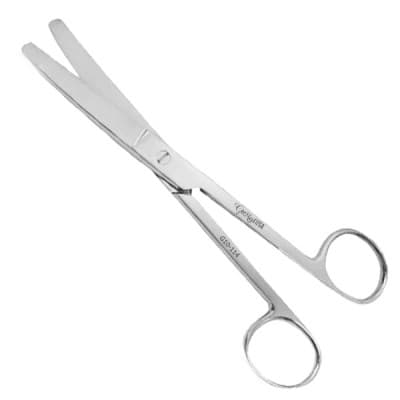
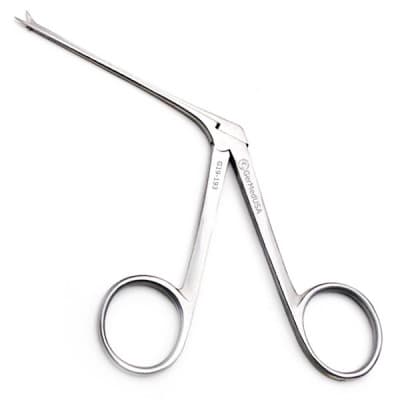
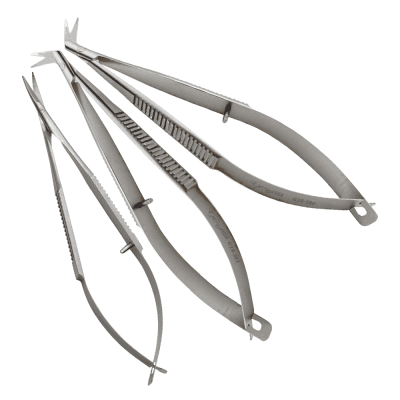
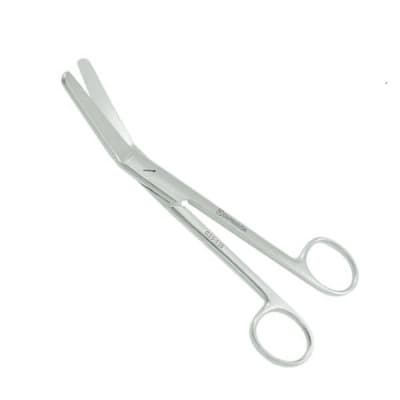
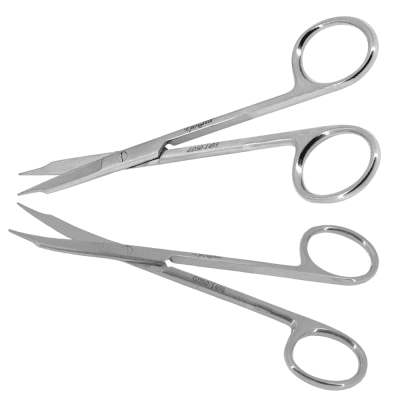
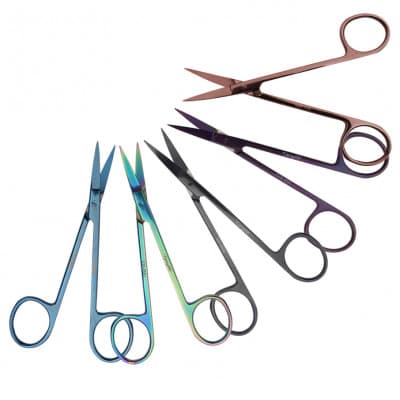
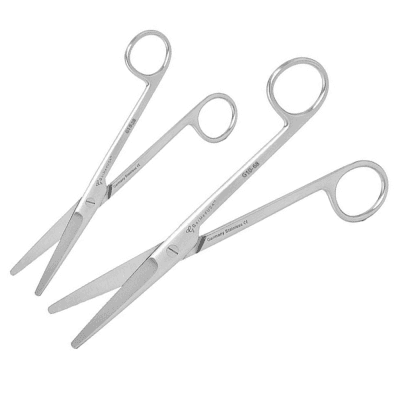
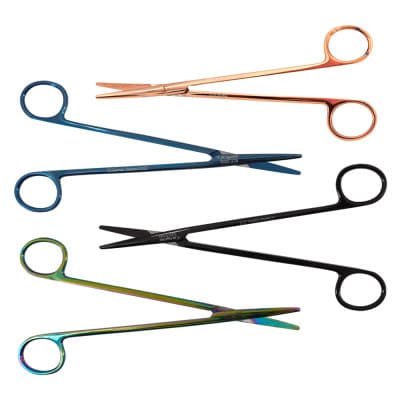
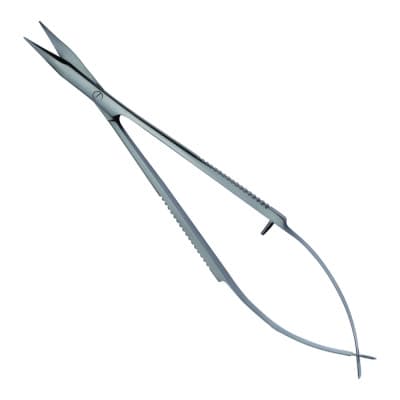
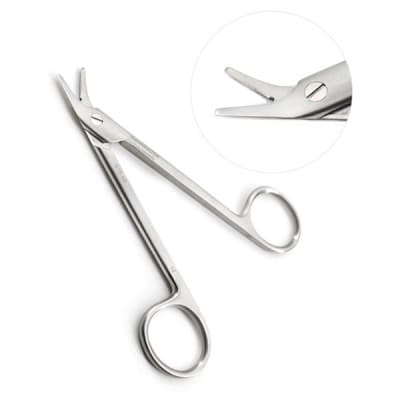
Surgical Scissors
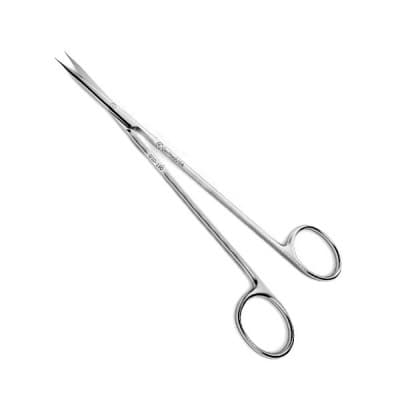
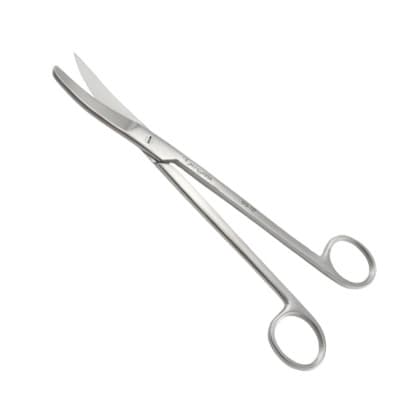
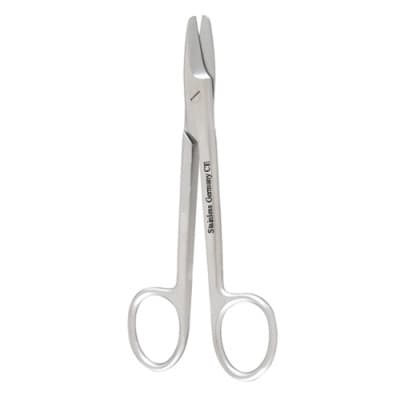
Surgical scissors are precision cutting instruments used to divide tissue, trim sutures, and dissect anatomical planes during operative procedures. They are forged from surgical-grade stainless steel, finished to hold a sharp edge through repeated autoclave cycles, and shaped differently depending on whether the task calls for blunt dissection, fine tissue work, or heavy cutting. GerMedUSA manufactures more than 30 categories of surgical scissors, from Mayo and Metzenbaum patterns through to Westcott tenotomy and microsurgery scissors. Every instrument is produced under ISO 13485 conditions and carries a 5-year warranty.
Choosing the right pattern matters more than most buyers expect. A scissor that is correct for fascia will crush delicate tissue, and one built for ophthalmic work will fail quickly against suture wire. The guidance below covers materials, blade and tip configurations, and how to match a pattern to the procedure.
Types of Surgical Scissors
Surgical scissor patterns are grouped by the tissue they are designed to handle. The categories below link through to the full range.
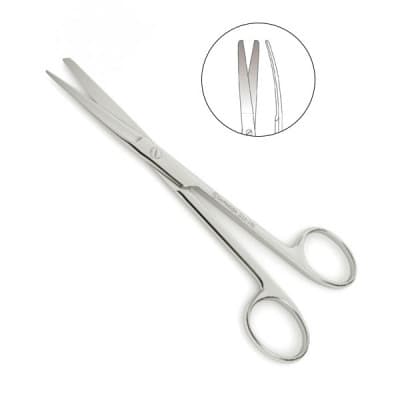
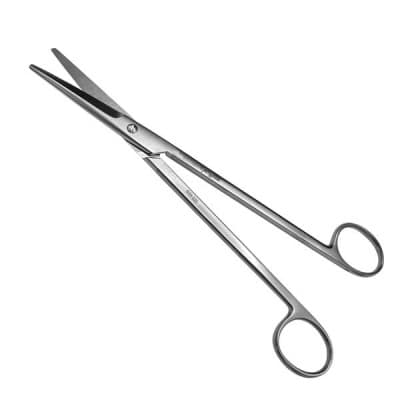
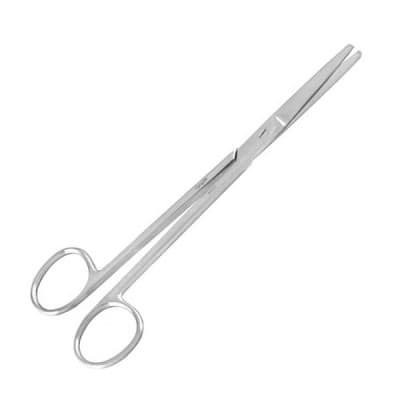
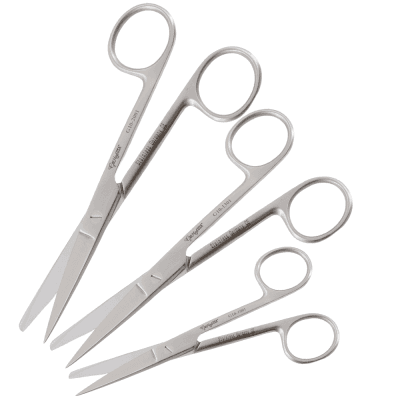
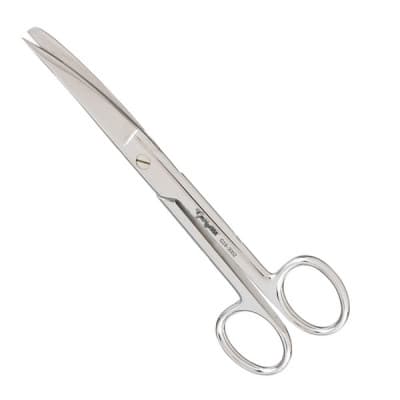
General operating and dissecting Mayo scissors for heavy tissue and fascia, Metzenbaum scissors for blunt dissection of delicate tissue, Operating scissors for general theatre use, and Mayo Stille scissors for heavier cutting.
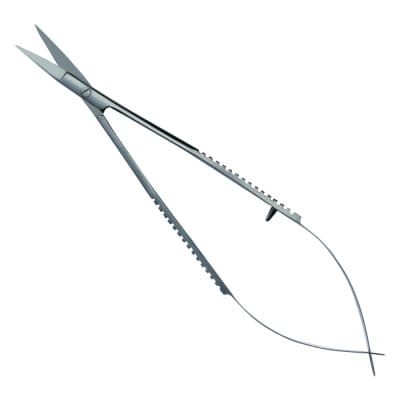
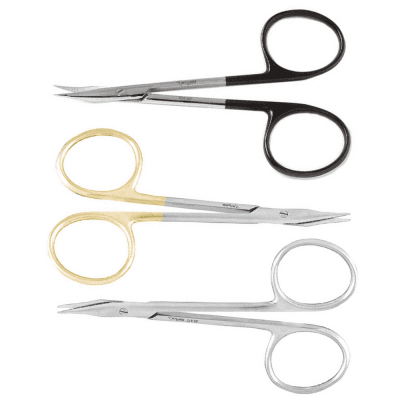
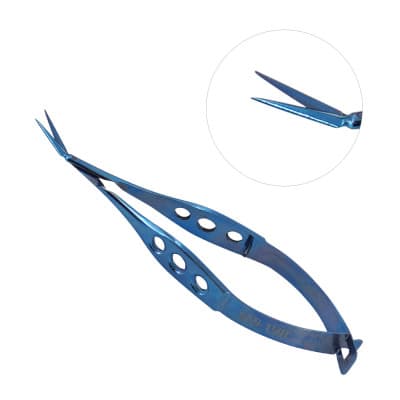
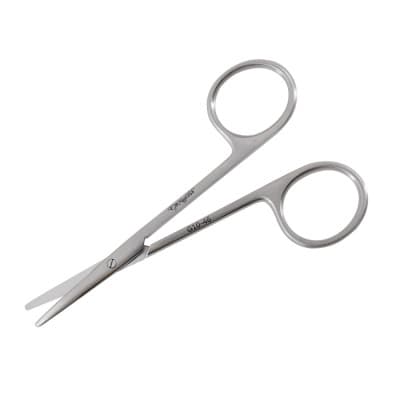
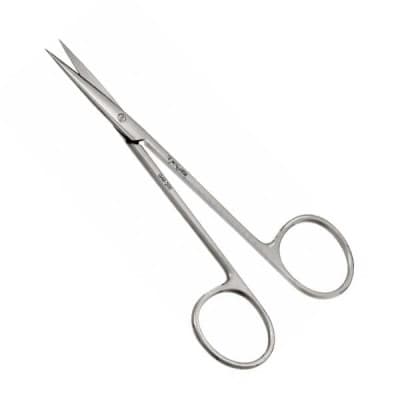
Fine and microsurgical Iris scissors and Stevens tenotomy scissors for precise superficial work, Westcott tenotomy scissors and Eye scissors for ophthalmic procedures, plus dedicated Microsurgery scissors.
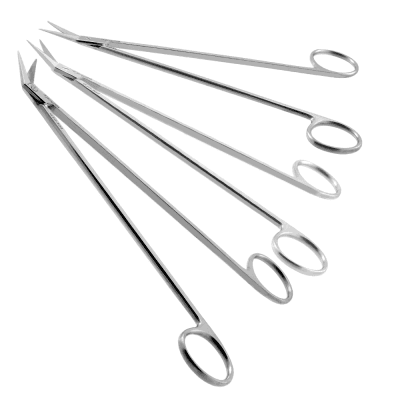
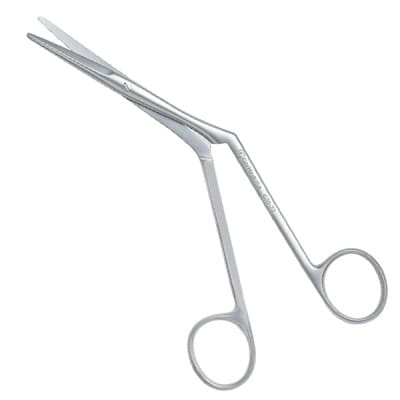
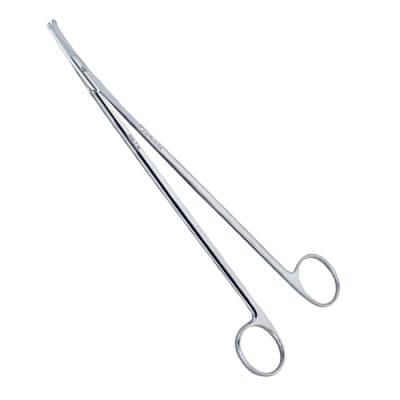
Specialty and procedure-specific Cardiovascular and thoracic scissors, Neurosurgical scissors, Gynecological scissors, Nasal and Tonsil scissors, and Plastic surgery scissors.
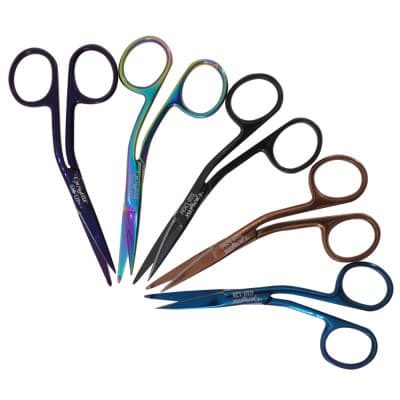
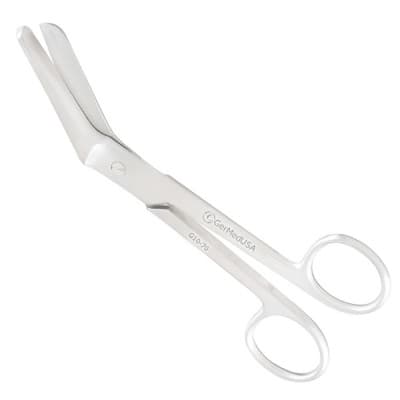
Utility and ward Bandage scissors for dressings, Suture scissors for stitch removal, Wire cutting scissors, and Utility scissors for general theatre tasks.
The complete range of 34 categories is listed below. For a wider view of instrument families, see our guide to common types of surgical scissors.
Stainless Steel Surgical Scissors
Stainless steel surgical scissors are the standard across operating theatres because the alloy resists corrosion, tolerates repeated steam sterilisation, and can be reground to a working edge over a long service life. GerMedUSA uses German surgical-grade stainless steel, hardened and tempered so the blades retain sharpness under load without becoming brittle at the tips.
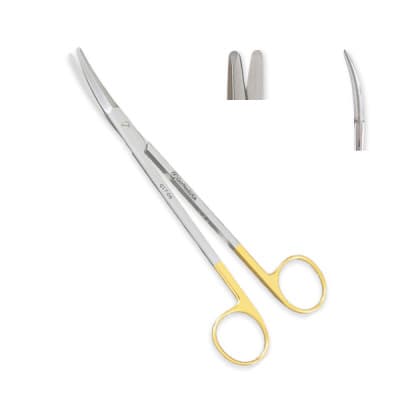
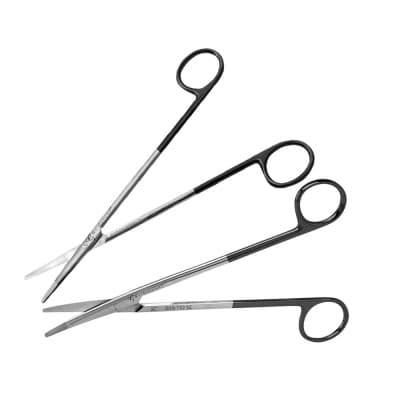
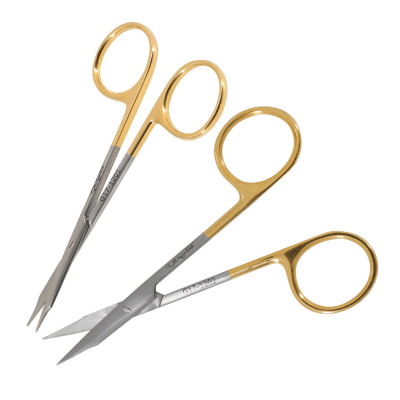
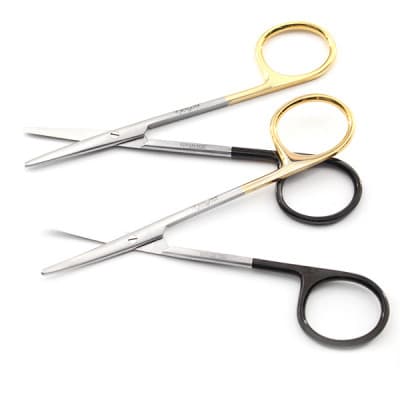
Some patterns are also available with tungsten carbide inserts. A tungsten carbide cutting edge stays sharper for considerably longer than plain stainless and is worth the additional cost on instruments in daily rotation. These are identified by gold-plated ring handles, which is the recognised convention across the industry.
How to Choose Surgical Scissors
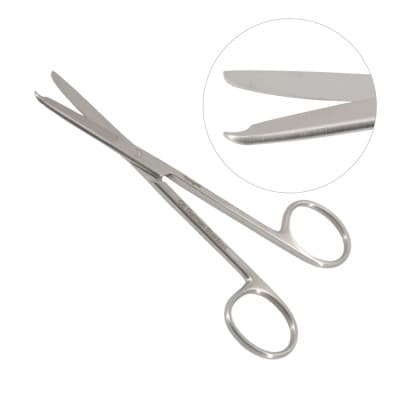
- Blade tips. Sharp/sharp for precise incision, blunt/blunt for dissection where tissue must be separated rather than cut, and sharp/blunt as a general-purpose compromise. Blunt tips reduce the risk of inadvertent puncture when working near vessels or bowel.
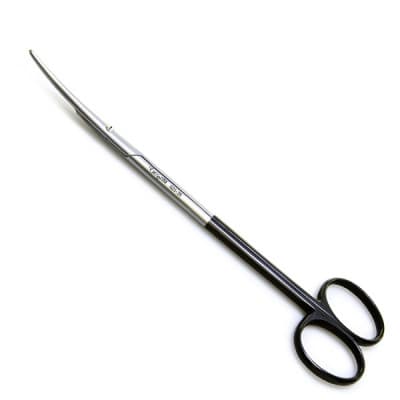
- Straight or curved. Straight blades suit superficial cutting and suture work where the line of sight is clear. Curved blades give better visibility of the tip in deep cavities and follow tissue planes more naturally during dissection.
- Length. Shorter instruments give more control for superficial work. Longer patterns are needed to reach into the abdominal or thoracic cavity without the surgeon's hand obstructing the field.
- Serration. One serrated blade grips slippery tissue and stops it sliding forward during the cut. Smooth blades give a cleaner edge on fine tissue and are preferred in ophthalmic and microsurgical work.
- Handling. Ring size should suit the user's hand, since a poor fit causes fatigue across a long list. Left-handed instruments are available where the standard blade orientation causes the cut to be pushed apart rather than drawn together.
Care and Sterilisation
Surgical scissors should be rinsed of blood and debris immediately after use, before proteins have a chance to dry on the blades. Manual or ultrasonic cleaning follows, then thorough drying, then autoclaving with the instrument in the open position so the joint and blade faces are exposed to steam. Storing instruments closed and wet is the most common cause of premature corrosion and stiffness at the joint.
Sharpening should be carried out by a qualified instrument technician using proper equipment. A poorly reground blade will not shear correctly along its full length and can damage tissue. Our full cleaning and sterilisation guidance covers the process in detail.
Frequently Asked Questions
How many types of surgical scissors are there?
There is no single fixed number, but GerMedUSA lists 34 distinct categories of surgical scissors, and clinically the patterns in routine use number in the dozens. Most theatres work with a core group of five to ten patterns, typically Mayo, Metzenbaum, Iris, suture, and bandage scissors, with specialty patterns added by discipline.
What are surgical scissors made of?
Surgical scissors are made from surgical-grade stainless steel, most commonly martensitic alloys that can be hardened to hold a cutting edge. Higher-wear instruments are fitted with tungsten carbide inserts at the cutting edge, identified by gold ring handles. Some specialty patterns use titanium where weight or magnetic resonance compatibility is a factor.
What is the difference between Mayo and Metzenbaum scissors?
Mayo scissors have thicker, heavier blades for cutting dense tissue such as fascia and sutures. Metzenbaum scissors have a longer shank relative to blade length and finer blades, making them suited to blunt dissection of delicate tissue. As a rule, Mayo cuts and Metzenbaum separates.
How do you sterilize surgical scissors?
Clean the instrument first to remove all organic debris, then dry it fully, then autoclave at 121 to 134 degrees Celsius according to the cycle validated by your facility. The scissors must be placed in the open position so steam reaches the box joint and blade surfaces. Home methods such as boiling or alcohol soaking disinfect but do not sterilise, and are not adequate for any instrument used in a clinical procedure.
What is the difference between straight and curved surgical scissors?
Straight scissors cut in a direct line and are used for superficial work, suture cutting, and situations where the surgeon has a clear view of the blade. Curved scissors let the surgeon see the tip while working at depth and follow the natural contour of tissue planes during dissection.
Are surgical scissors reusable?
Yes. Instruments manufactured from surgical-grade stainless steel are designed for repeated use across many sterilisation cycles. Service life depends on handling, cleaning practice, and how frequently the instrument is used against dense tissue. All GerMedUSA surgical scissors carry a 5-year warranty.
Custom Manufacturing
GerMedUSA manufactures customised surgical instruments to specification, including modified blade patterns, non-standard lengths, and set configurations built around a defined procedure. Contact our team to discuss requirements.

Bandage Scissors

Cardiovascular And Thoracic Scissors

Deaver Scissors

Dermal Scissors

Doyen Abdominal Scissors

Ear Scissors

Eye Scissors

Fergusson Abdominal Scissors

Goldman Fox Scissors

Gradle Scissors

Gynecological Scissors

Harrington Scissors

Iris Scissors

Mayo Scissors Dissecting

Mayo Stille Scissors

Metzenbaum Dissecting Scissors

Microsurgery Scissors

Mixter Scissors

Nasal Scissors

Neurosurgical Scissors

Operating Scissors

Plastic Surgery Scissors

Post Mortem Scissors

Ragnell Dissecting Scissors

Reynolds Scissors

Sims Uterine Scissors

Sistrunk Scissors

Stevens Tenotomy Scissors

Strabismus Scissors

Suture Scissors

Tonsil Scissors

Utility Scissors

Westcott Tenotomy Scissors