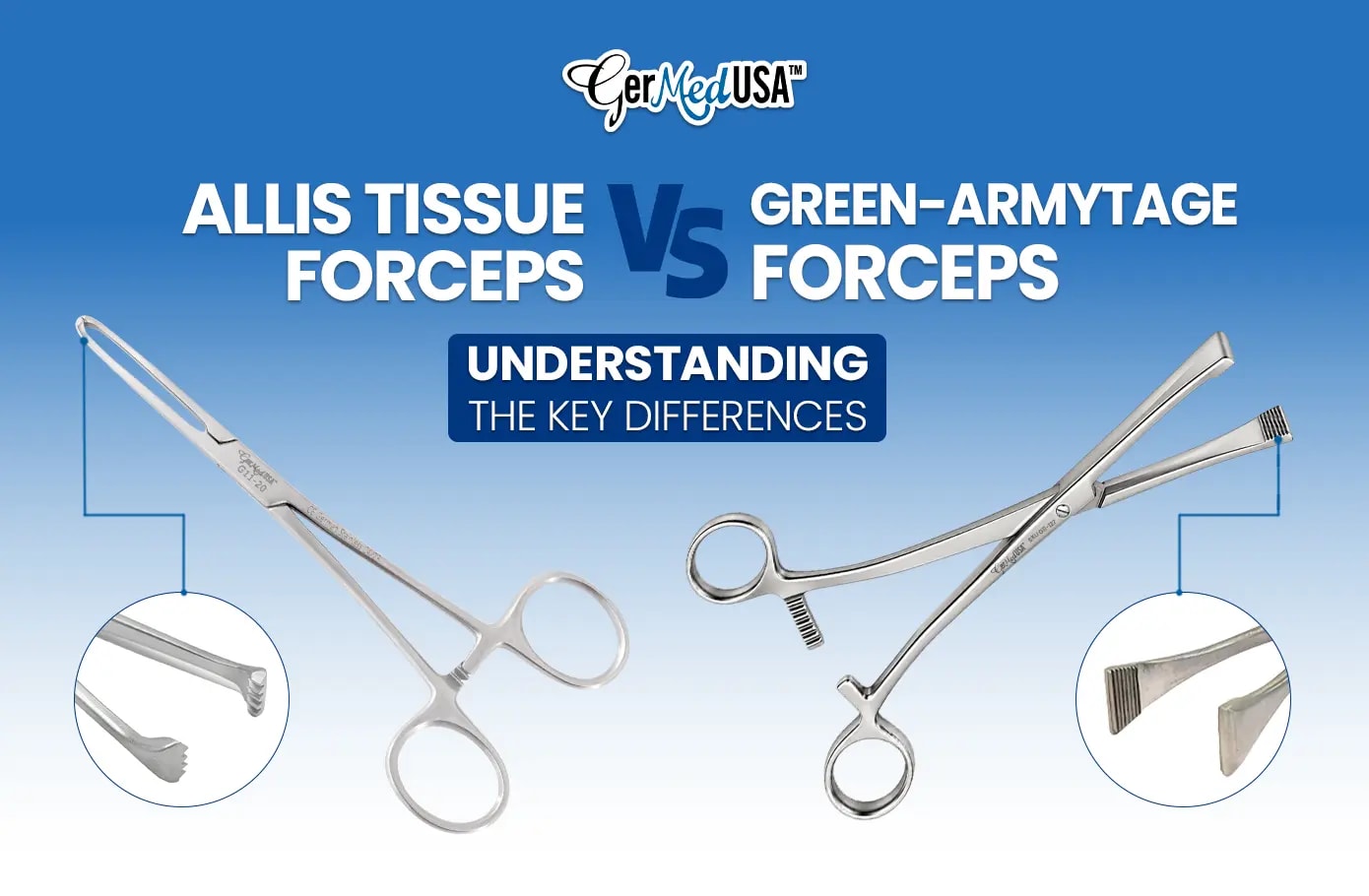
Allis tissue forceps and Green-Armytage forceps are both ratcheted, ring-handled surgical instruments, but they serve different purposes. Allis tissue forceps are designed to grasp, hold, and retract tissue, while Green-Armytage forceps are used to grasp and compress uterine tissue edges to help control bleeding, particularly during cesarean sections.
Although both instruments have a similar handle design, their jaw configurations and clinical applications are different. Understanding these differences helps surgical teams identify the correct instrument for each procedure and select appropriate instruments when preparing surgical trays.
Allis Tissue Forceps vs. Green-Armytage Forceps: Quick Comparison
|
Feature |
Allis Tissue Forceps |
Green-Armytage Forceps |
|
Primary function |
Grasp, hold, and retract tissue |
Grasp and compress tissue edges for hemostasis |
|
Jaw design |
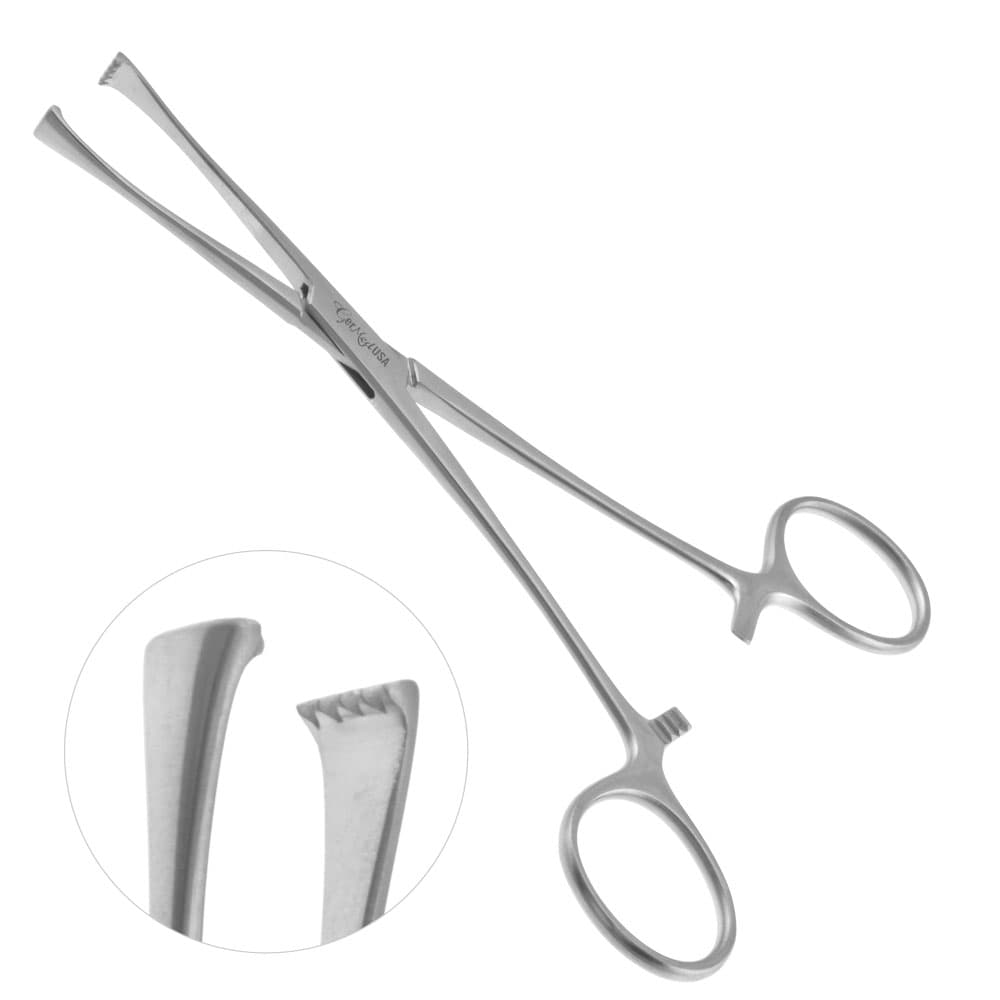
Interlocking teeth at the tips |
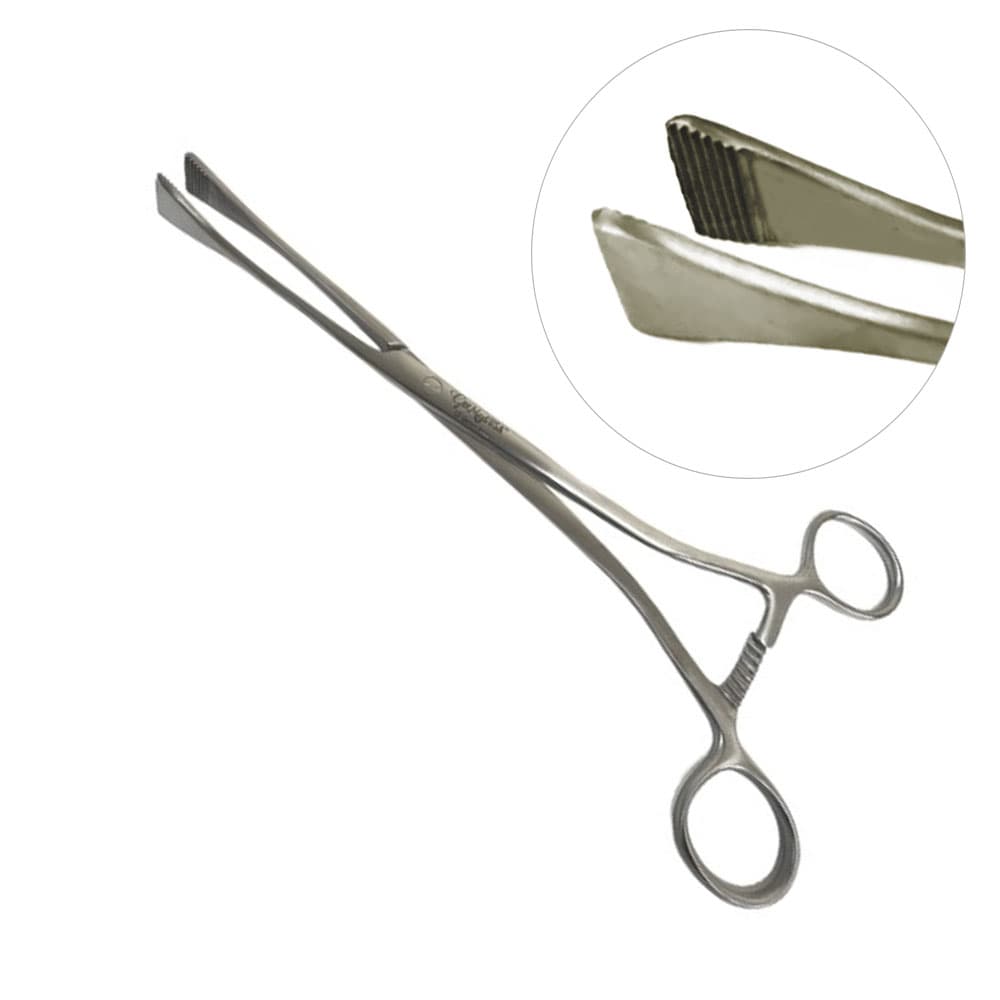
Broad, flat blades with transverse serrations |
|
Tissue contact |
Concentrated gripping points |
Wider contact area |
|
Tissue handling |
Provides a firm grip on selected tissue |
Holds uterine tissue edges and applies compression |
|
Common applications |
General, abdominal, and gynecological surgery |
Cesarean section and other obstetric or gynecological procedures |
|
Handle design |
Ring handles with ratchet lock |
Ring handles with ratchet lock |
|
Common sizes at GerMedUSA |
6", 7 1/2", and 10" (Willauer pattern) |
8 1/2" |
|
Main distinction |
Designed for tissue grasping and traction |
Designed for tissue-edge clamping and hemostasis |
The main difference is the working end. Allis forceps use interlocking teeth to secure tissue, whereas Green-Armytage forceps have broader blades that distribute compression across a larger contact area.
What Are Allis Tissue Forceps?
Allis tissue forceps are ratcheted, ring-handled surgical instruments used to grasp, hold, and manipulate firm tissue during surgical procedures.
Their jaws feature interlocking teeth that provide a secure grip and help prevent tissue from slipping during manipulation. This design makes them useful when surgeons need controlled traction or stabilization of tissue.
Allis forceps are commonly used to hold fascia, skin edges, and other firm tissue structures during general and gynecological surgery. However, their toothed jaws can cause tissue trauma, so they should be selected according to the tissue involved and the intended surgical application.
Allis Tissue Forceps: Available Designs and Sizes at GerMedUSA
GerMedUSA offers several Allis tissue forceps configurations to accommodate different surgical requirements.
- 3x4 Teeth: Provides an interlocking grip for tissue handling.
- 4x5 Teeth: A commonly available configuration for general tissue grasping.
- 5x6 Teeth: Features a broader tooth arrangement for secure tissue handling.
- 6-Inch Length: Suitable for procedures requiring a shorter instrument.
- 7 1/2-Inch Length: Provides additional working reach.
- 10-Inch Allis Willauer: Offers extended reach for deeper surgical access.
Other variations include Baby Allis, Allis-Adair, Pedifine Allis, and Allis-NC tissue forceps, each with its own jaw configuration and intended application.
The ratchet mechanism keeps the jaws closed once engaged, allowing the surgeon to maintain a controlled grip without continuously squeezing the handles.
Although Allis instruments are sometimes informally called Allis clamps, their primary purpose is tissue grasping and stabilization rather than conventional vascular hemostasis.
For more information, see our guide to Allis tissue forceps, including their uses, types, and sizes.
What Are Green-Armytage Forceps?
Green-Armytage forceps, also known as Green-Armytage hemostatic forceps, are specialized obstetric and gynecological instruments primarily used during cesarean sections.
Unlike Allis forceps, they feature broad, flat blades with transverse serrations along their gripping surfaces. This design allows the instrument to grasp uterine tissue edges and distribute pressure across a wider area.
During a cesarean section, Green-Armytage forceps may be placed along the edges of the uterine incision to hold the tissue and help control bleeding while the surgeon works on the incision.
They may also assist in managing bleeding associated with uterine tears and other gynecological procedures, depending on the surgical situation.
Green-Armytage Forceps Specifications at GerMedUSA
GerMedUSA offers the Green-Armytage Hemostatic Forceps with the following specifications:
- Product: Green-Armytage Hemostatic Forceps
- SKU: G11-127
- Length: 8 1/2 inches
- Jaw design: Broad, flat blades with serrations
- Handle: Ring handles with a ratchet locking mechanism
- Primary application: Obstetric and gynecological surgery
The broad blade design distinguishes Green-Armytage forceps from conventional toothed tissue graspers. Their purpose is to hold and compress tissue edges while providing the surgeon with controlled access to the operative field.
When to Use Allis Tissue Forceps vs. Green-Armytage Forceps
The choice between these instruments depends on the tissue being handled and the surgical task.
1. Holding Tissue During Dissection
When a surgeon needs to grasp and stabilize firm tissue during dissection, Allis tissue forceps provide a secure hold through their interlocking teeth.
They can be used to maintain traction on selected tissue edges while the surgeon works in the surrounding area.
Green-Armytage forceps are not generally selected for routine tissue grasping during general surgical dissection.
2. Managing Uterine Incision Edges During Cesarean Section
During a cesarean section, Green-Armytage forceps may be applied to the uterine incision edges to hold the tissue and help control bleeding through compression.
Their broad blades provide a wider contact surface than the concentrated gripping points of Allis forceps.
3. Holding Tissue During Suturing
Allis forceps can help stabilize suitable tissue edges during suturing, particularly when a firm grip is required.
Green-Armytage forceps are used in obstetric and gynecological settings to grasp uterine tissue margins and assist with hemostasis and exposure during repair.
The instrument selected should always reflect the tissue characteristics and the requirements of the procedure.
Other Surgical Instruments That Can Be Confused With Allis and Green-Armytage Forceps
Several other Intestinal surgical instruments have overlapping applications or similar designs. Understanding their differences can help surgical teams select the appropriate instrument.
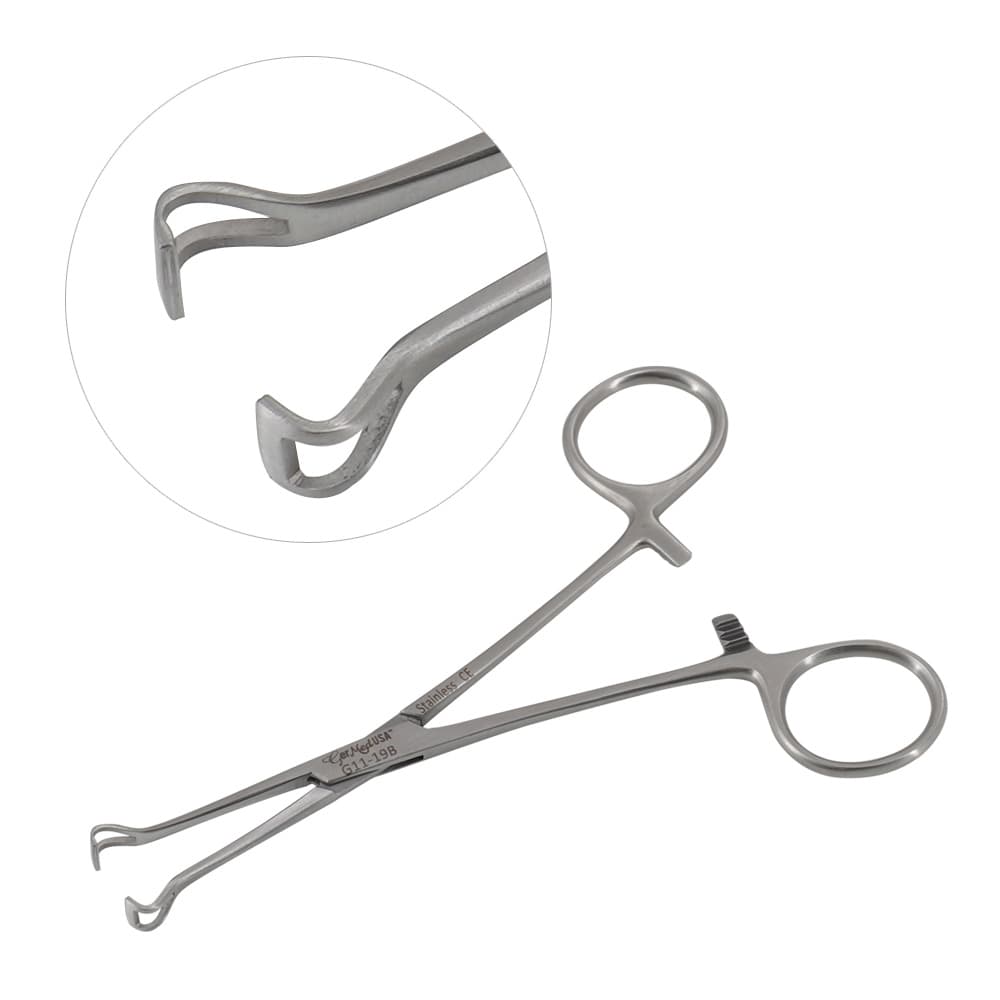
- Babcock Tissue Forceps: Share the same long, slender, ratcheted handle profile as Allis forceps, but feature rounded, fenestrated jaws with smooth, toothless edges designed to grasp delicate or tubular structures like the intestine with less traumatic tissue handling than toothed Allis forceps.
- Allis-Adair Tissue Forceps: Mirror the shaft, ratchet, and interlocking-tooth mechanism of standard Allis forceps but feature a flared tip with a broader interlocking tooth configuration (9×10 instead of 4×5) for grasping and stabilizing wider tissue edges.
- Pennington Tissue Forceps: Resemble Green-Armytage forceps with their wide, spade-like tips, but feature an open triangular window and lighter serrations for atraumatic tissue grasping rather than heavy uterine hemostasis.
How to Choose Between Allis and Green-Armytage Forceps
When selecting between Allis tissue forceps and Green-Armytage forceps, consider the following factors:
1. Surgical Application
Determine whether the instrument is needed to grasp and retract tissue or to hold and compress tissue edges for hemostasis. Allis forceps are intended for the former, while Green-Armytage forceps are primarily used for the latter in obstetric and gynecological surgery.
2. Jaw Configuration
Examine the working end of the instrument. Allis forceps have interlocking teeth, while Green-Armytage forceps have broad blades with transverse serrations.
3. Instrument Length
Consider the working depth and accessibility required during the procedure. GerMedUSA offers Allis forceps in several lengths, including the 10-inch Allis Willauer pattern, and Green-Armytage forceps in an 8 1/2-inch configuration.
4. Tissue Characteristics
Consider the type and condition of the tissue being handled. The toothed jaws of Allis forceps can cause tissue trauma, making appropriate instrument selection important. Broad-bladed Green-Armytage forceps are designed for grasping and compressing uterine tissue edges.
5. Material and Reprocessing Requirements
Check the instrument's material, construction, and manufacturer-provided reprocessing instructions. Reusable surgical instruments should be cleaned, inspected, and sterilized according to their specific instructions for use.
For additional options, explore GerMedUSA's complete collection of tissue forceps and gynecological instruments.
Final Thoughts
The difference between Allis tissue forceps and Green-Armytage forceps comes down to their design and intended function.
Allis forceps use interlocking teeth to grasp, hold, and retract selected tissue during surgery. Green-Armytage forceps feature broad, serrated blades designed to grasp and compress uterine tissue edges, particularly during cesarean sections and other gynecological procedures.
Although both instruments have ring handles and ratchet locks, they are not interchangeable. Selecting the appropriate instrument according to the surgical application and tissue requirements supports effective instrument handling and surgical workflow.
Explore GerMedUSA's selection of Allis tissue forceps and Green-Armytage hemostatic forceps to compare available configurations and specifications.
Frequently Asked Questions
1. What is the main difference between Allis and Green-Armytage forceps?
Allis tissue forceps are designed to grasp, hold, and retract tissue using interlocking teeth. Green-Armytage forceps feature broad, serrated blades that grasp and compress tissue edges to help control bleeding, particularly during cesarean sections.
2. What are Allis tissue forceps used for?
Allis tissue forceps are used to grasp, stabilize, and retract firm tissue during surgical procedures. Their interlocking teeth provide a secure grip on structures such as fascia and skin edges.
3. What are Green-Armytage forceps used for?
Green-Armytage forceps are primarily used in obstetric and gynecological surgery, particularly during cesarean sections. Their broad blades grasp and compress uterine incision edges to help control bleeding and maintain tissue control during repair.
4. Are Green-Armytage forceps hemostatic forceps?
Yes. Green-Armytage forceps are specialized hemostatic instruments used to grasp and compress tissue edges, particularly in obstetric surgery. Their broad blades distribute pressure over a larger contact area.
5. Can Allis forceps be used instead of Green-Armytage forceps?
No. Although both instruments have ratchet locks and are used to grasp tissue, their jaw designs and intended applications differ. Allis forceps provide a toothed grip for tissue handling, whereas Green-Armytage forceps are designed for grasping and compressing uterine tissue edges.
6. Do Allis forceps cause tissue damage?
They can. Allis forceps have interlocking teeth that provide a firm grip but may puncture or traumatize tissue. Their use should be limited to appropriate tissue and applications, with attention to gripping pressure and traction.
7. What size are Green-Armytage forceps?
The Green-Armytage Hemostatic Forceps listed by GerMedUSA measure 8 1/2 inches in length and are identified by SKU G11-127.
8. What is the difference between Allis and Babcock forceps?
Allis forceps have interlocking teeth designed for a firm grip on selected tissue. Babcock forceps have rounded, fenestrated jaws designed for less traumatic handling of delicate or tubular structures. The appropriate choice depends on the tissue and surgical application.