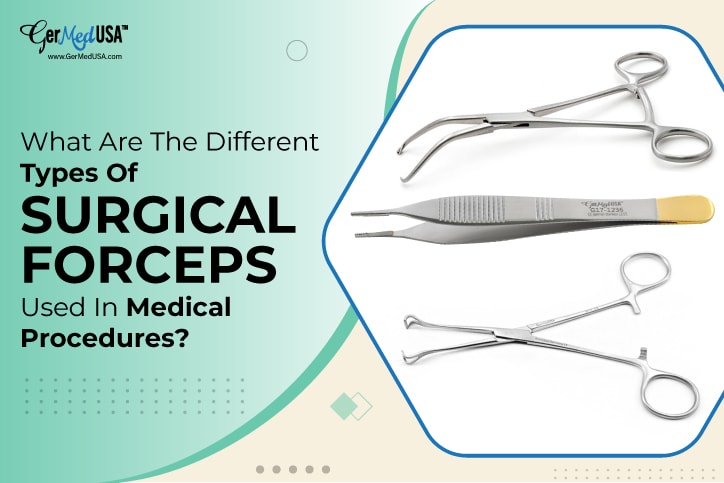
Forceps are essential instruments for almost all medical procedures and make up a significant portion of any 100 surgical instruments reference. They come in various shapes and sizes, each with its own specific use.
Medical professionals have to choose the right type of surgical forceps to ensure efficient performance during the procedure.
Moreover, they must choose quality medical forceps, such as those made of medical-grade stainless steel with highly precise craft.
Here, we will discuss the different surgical forceps types and their specific uses in healthcare.
But first, let’s learn what these surgical instruments are !!
What are Surgical Forceps?
Surgical instruments forceps are must-have medical tools primarily used for
• Manipulating tissues
• Grasping and holding tissues
• Bone reduction
• Holding dressings and other material
• Clamping blood vessels
What Are the Different Types of Surgical Forceps?
Surgeons use various forceps designs because each procedure requires a specific level of grip, control, and safety for the tissue. Knowing how each tool functions allows the medical teams to make better decisions during surgical processes.
Here’s a quick overview of different types of surgical forceps and their uses, so you can understand the purpose of each one
Thumb Tissue Forceps

Thumb tissue forceps are specially designed surgical instruments for grasping, holding, and manipulating tissues.
These are non-ratcheting forceps, so surgeons have to open and close them by squeezing the handles together. This makes them ideal for delicate procedures where precise control is needed.
Here are the key features of Thumb Tissue Forceps:
• Rust- and corrosion-resistant build
• Non-ratcheted design
• Precise control
• Low maintenance
Thumb tissue forceps have serrated tips that help to grip tissue securely without damaging it.
Additionally, the serrations help prevent the tissue from slipping out of the forceps during use.
These forceps are available in various lengths to accommodate user preferences and surgical procedures.
They are commonly used in:
• General surgery
• Orthopedic surgery
• Gynecological surgery
• Plastic surgery
Babcock Forceps

Babcock surgical forceps types have a special design to grasp and hold delicate tissues. These feature triangle-shaped fenestrated jaws that prevent damaging the tissue they are grasping.
Here are the key features of Babcock surgical forceps:
• High tensile strength
• Reusable after sterilization
• Stainless steel construction
• Low maintenance
Surgeons prefer these forceps for laparotomy and intestinal procedures, where it is important to avoid damaging the tissue.
Babcock Forceps have a long shaft with a ratcheting mechanism to lock them in place.
This makes them ideal for grasping and holding tissue that is difficult to control, such as intestines or large blood vessels.
These medical forceps are suitable for use in different procedures, including:
- Laparotomy
- Intestinal surgery
- Gynecological surgery
- Urology
- Vascular surgery
Uterine Dressing Forceps GYN

Uterine dressing forceps GYN are a type of surgical forceps used to grasp and hold delicate tissue in gynecological procedures.
They have atraumatic jaws serrated on the inner surface.
Here are the key features of Uterine dressing forceps GYN:
• Rust- and corrosion-resistant
• Sterilizable and reusable
• High tensile strength
• Efficiency and precision in surgical procedures
Uterine dressing forceps GYN are used in various gynecological procedures, including hysteroscopy, dilation and curettage (D&C), endometrial biopsy, myomectomy, and ovarian cystectomy.
Moreover, these forceps are made of high-quality stainless steel that is durable and easy to clean.
Kelly Hemostatic Forceps

Kelly hemostatic forceps have an ideal design for grasping and clamping blood vessels during different surgeries.
They have a long, straight shaft with smooth jaws curved slightly at the tips.
Here are the key features of Kelly hemostatic forceps:
• Ergonomic design
• High tensile strength
• Easy to clean
• Available in multiple variations
Surgeons can easily insert these forceps into narrow spaces and grasp small vessels securely.
Kelly hemostatic forceps are useful in various procedures, including general and gynecological surgery.
DeBakey Forceps
DeBakey Forceps are commonly used in cardiovascular, vascular, and other microsurgical procedures where delicate tissue handling is crucial.
These forceps are designed with precision and finesse, making them suitable for delicate surgical tasks.
Here are the key features of DeBakey Forceps:
• Narrow tips and a rigid grip ensure comfort
• Secure handling
• Precision and efficiency in usage
• High-grade stainless steel construction
The distinctive feature of DeBakey Tissue Forceps is their fine, gently curved jaws that allow for atraumatic manipulation of tissues and blood vessels.
Allison Tissues Forceps

Allison Tissue Forceps, also known as Allison Lung Grasping Forceps, are specialized surgical instruments used in thoracic and cardiovascular surgeries.
These forceps have a unique design with long, slender jaws that have multiple serrations along their length.
Here are the key features of Allison Tissue Forceps:
• Sterilizable and durable
• Available in multiple variations
• High-grade stainless steel construction
• Ergonomic design
This ergonomic design enables them to securely grasp and hold delicate tissues, particularly lung tissues, without causing excessive trauma.
The serrated jaws provide a firm grip, reducing the risk of slippage during procedures.
Carmalt Forceps

Carmalt Forceps are designed with hinged jaws with transverse serrations running along the length. Their use is common in general surgery, obstetrics, and gynecology.
Here are the key features of Carmalt Forceps:
• Gentle Tissue Handling
• Comfort and control during the surgical procedure
• Durability and reliability
• Ergonomic design
The serrations of the forceps’ jaws aid in securely gripping tissues, vessels, or other bodily structures, making them suitable for clamping and controlling blood flow during surgeries.
These surgical forceps come in various sizes, allowing surgeons to choose the appropriate instrument based on the specific procedure's requirements.
Adson Forceps With Teeth

Adson forceps with teeth are used to grasp and hold delicate tissue. They feature atraumatic jaws with a single row of teeth on one side.
So these forceps provide enough grip to prevent the tissue from slipping out.
Here are the key features of Adson Forceps with teeth:
• Ergonomic, serrated handle ensures a steady grip
• Fine-toothed tips provide traction and minimize slippage
• Durable, sterilizable, and reusable
• Lightweight
Adson forceps are useful in
- General surgery
- Orthopedic surgery
- Gynecological surgery
- Plastic surgery
Tenaculum Forceps

Tenaculum forceps are specially designed for grasping and holding tissue, blood vessels, or the uterus or cervix during various gynecological procedures.
These forceps have sharp, pointed jaws that help pierce the tissue and then grasp it securely.
Here are the key features of Tenaculum forceps:
• High-tensile strength
• Sterilizable and reusable
• Lightweight and easy to use
• Low maintenance
These are ideal for holding tissue that is difficult to control, such as the cervix or the uterus.
Tenaculum forceps are typically helpful in more delicate procedures, such as D&C and hysteroscopy.
Cervical Biopsy Forceps

These forceps are used to obtain a small tissue sample from the cervix for diagnostic purposes.
The sharp, cup-shaped jaws of these biopsy forceps types aid in piercing the cervix and then grasping a small piece of tissue.
Here are the key features of Cervical Biopsy Forceps:
• Sterilizable and Reusable
• Fine, durable, and sharp
• Lightweight and easy to use
• High-tensile strength
Surgeons need these forceps in various procedures, including colposcopy, cervical cancer screening, evaluation of abnormal pap smear results, and management of cervical dysplasia.
Moreover, these forceps are safe and gentle on tissue, making them an excellent choice for delicate procedures.
Martin Tissue Forceps

Martin tissue forceps are specially designed for grasping and holding medium-weight tissue.
Their serrated jaws help grip the tissue securely without damaging it.
The serrations also help to prevent the tissue from slipping out of the forceps during use.
Here are the key features of Martin tissue forceps:
• High-grade stainless steel construction
• Durable and long-lasting
• Available in several variations
• Lightweight and easy to handle
Martin tissue forceps aid surgeons in a variety of procedures, including:
• Gynecological surgery
• Urology
• Vascular surgery
• Plastic surgery
Additionally, German stainless steel makes these forceps surgical instruments sterilizable for reuse.
Dressing Forceps Serrated

Dressing forceps serrated are specialized surgical forceps for grasping and holding dressings, sponges, and other small objects. Their serrated jaws grip the objects securely without damaging them.
Here are the key features of Dressing Forceps Serrated:
• Durable and resistant
• High-grade stainless steel
• Precision and grip
• Easy to clean
These forceps have common use for
• Dressing changes
• Wound packing
• Surgical procedures
• Laboratory work
To accommodate surgeons’ needs, these medical forceps are available in various lengths.
Bone Reduction Forceps

These surgical forceps types help hold bone fragments during orthopedic procedures.
These are designed to grip bone securely without damaging it. The jaws have serrations to provide a better grip on the bone.
Here are the key features of Bone Reduction Forceps:
• Finger-ring handles
• Ratchet lock mechanism
• Angled jaws
• Efficiency and control
Bone reduction forceps are helpful in various orthopedic procedures, including:
• Fracture reduction
• Bone grafting
• Joint replacement
• Spinal surgery
Furthermore, the ergonomic design of these forceps allows for precise control during procedures.
Kocher Hemostatic Forceps

Kocher hemostatic forceps are ideal for clamping and controlling bleeding vessels during surgery. They feature jaws that are serrated on one side and smooth on the other.
The serrated side grasps the vessel, and the smooth side applies pressure to stop the bleeding during general, gynecological, urology, vascular, and neurosurgery.
Here are the key features of Kocher Hemostatic Forceps:
• Ergonomic design
• Low maintenance
• Precision and control
• Durability and reliability
Moreover, these forceps are made of high-quality stainless steel that is durable and easy to clean.
Additionally, their ratcheting mechanism feature allows them to be locked in place.
Traumatic Vs. Atraumatic Forceps
Surgical forceps play a critical role in maintaining precise control and manipulation of tissues during various medical procedures.
Two broad categories of forceps are traumatic and atraumatic forceps, each with distinct features to suit different surgical needs.
Traumatic Forceps
Traumatic forceps are designed to exert a stronger grip on tissues.
They often have teeth, serrations, or other textured surfaces on their jaws that aid in holding tissues firmly.
These forceps are commonly used in procedures where the tissue's integrity is less critical, such as during blunt dissections.
Atraumatic Forceps
Atraumatic forceps are designed to minimize tissue damage and trauma during surgery.
They typically have smoother, non-serrated jaws that exert a gentler grip on tissues.
This design reduces the risk of tissue crushing, tearing, or other forms of damage.
Atraumatic forceps are used in delicate procedures where tissue integrity is paramount, such as
• Microsurgery
• Cardiovascular surgery
• Neurosurgery
Proper Care and Maintenance of Surgical Forceps
The longevity of surgical instruments depends on proper handling, care, and maintenance. After every procedure, surgical forceps should be thoroughly cleaned to maintain optimal hygiene and performance.
Even stainless steel forceps require proper cleaning and sanitizing to avoid rust and corrosion.
Here are some care and maintenance measures to ensure optimal performance of medical forceps.
• Clean and dry instruments immediately after use to prevent residue from causing stains. Use distilled water with neutral pH solutions for cleaning and sterilization.
• Dry all instruments thoroughly to avoid corrosion and water spots. Keep forceps and scissors open while drying and store everything in a clean, dry place.
• Always use instruments for their intended purpose. Incorrect use can damage them and affect performance during procedures.
• Avoid saline and other harsh solutions, as they can lead to corrosion and shorten the instrument’s lifespan.
• For manual cleaning, use a soft plastic or nylon brush and focus on joints and hard-to-reach areas. Do not use steel or wire brushes.
• Lubricate instruments with moving parts using surgical-grade lubricants before autoclaving. Do not use industrial oils.
• Keep instruments open during sterilization so steam can reach all surfaces.
• Ultrasonic cleaning is effective for removing debris, with a recommended time of five to ten minutes.
Patient safety remains the top priority in every surgical procedure. Thus, the quality of surgical instruments plays an essential role in supporting consistent performance and dependable outcomes.
How to Select the Right Surgical Forceps?
Here are some key factors to help you choose the right forceps for medical procedures.
- Tissue Type:
Always pick atraumatic forceps when dealing with delicate tissues (nerves, vessels). Such tissues need smooth or fine-tipped forceps like DeBakey or Gerald forceps. Tougher tissues can tolerate toothed forceps (Adson with teeth) that grip more securely without slipping.
- Procedure Type:
General surgery commonly uses standard thumb forceps, while microsurgery demands jeweler's or microforceps. Ophthalmic procedures have their own specialized designs, as do cardiac and laparoscopic surgeries.
- Tip Design:
Toothed tips offer a firm grip but can cause tissue trauma. They can be used for skin, fascia, or tough structures. Serrated or smooth tips are gentler and better for fragile or vascular tissue. Ringed or locking forceps are used when prolonged tissue retraction is needed
- Length and Reach:
Longer forceps are needed for deep cavities or laparoscopic ports. Shorter ones give better control in superficial or confined spaces.
- Material:
Stainless steel is standard for reusability and autoclave compatibility. Titanium is preferred in MRI environments and microsurgery for its lightness. Disposable plastic forceps exist for single-use sterile contexts.
- Jaw Width and Pressure:
Wider jaws distribute pressure, reducing tissue trauma. For hollow organs (bowel, bladder), use non-crushing forceps like Babcock to avoid perforation.
- Ergonomics:
Handle design (spring action vs. thumb-ring) affects fatigue during long procedures. Surgeons often develop strong preferences based on hand size and technique.
Every forcep used in the OR is procedure-specific. It means that there’s no standard surgical forcep for every surgery. That’s why selecting the right forcep for clinical purposes is crucial.
Common Mistakes to Avoid When Using Surgical Forceps
Here are some common mistakes to avoid when handling surgical forceps.
• Using toothed forceps on delicate or vascular tissue
• Applying excessive gripping pressure, crushing tissue
• Using forceps to tear instead of proper dissection
• Prolonged clamping on hollow organs like the bowel or bladder
• Using damaged or misaligned forceps
• Holding forceps too far from the tip reduces precision
• Using short forceps in deep cavities
• Ignoring the fulcrum effect in laparoscopic ports
• Resterilizing single-use forceps
• Ignoring tactile feedback during tissue handling
Surgical procedures allow no margin for error, and the use of inappropriate instruments can lead to serious complications. By avoiding the mistakes mentioned above, surgeons can help ensure patient safety and improve surgical outcomes
Buy the Surgical Forceps You Are Looking For!
We have multiple variations available if you need the above medical forceps.
GerMedUSA Inc. is the manufacturer and supplier of top-notch medical instruments.
We manufacture our surgical instruments from German stainless steel, following FDA’s guidelines and ensuring high precision.
We know the requirements of medical professionals and craft our instruments accordingly.
Choose from our catalog, and let’s know what you need. Plus, we can customize our instruments for you.
FAQs
What are surgical forceps used for?
Surgical forceps are handheld instruments used to grasp, hold, manipulate, or extract tissue, organs, and objects during medical procedures. They give the surgeon precise control in areas where fingers cannot safely or effectively reach.
What are the two basic types of medical forceps?
The two basic types are thumb forceps (non-locking, held like a pencil and squeezed) and ring forceps (hinged with locking mechanisms for sustained grip). Each serves different purposes depending on the procedure and tissue type.
What is the difference between serrated and toothed forceps?
Serrated forceps have ridged jaws that grip tissue firmly without piercing it, making them suitable for delicate structures. Toothed forceps have pointed interlocking teeth that penetrate tissue for a more secure hold. It is used on tougher structures like skin and fascia.
What procedures require medical forceps?
Forceps are used across nearly all surgical specialties, including general surgery, gynecology, orthopedics, cardiovascular surgery, and ophthalmology. They are also used in wound care, endoscopy, childbirth, and emergency procedures.
What are the most common types of surgical forceps used in the OR?
The most commonly used types include Adson, DeBakey, Babcock, Allis, and Kelly forceps. Each is selected based on the tissue being handled and the specific step of the procedure.
What to look for when buying medical forceps?
Look for high-grade stainless steel manufacturing, proper jaw alignment, smooth locking action, and a size appropriate for the intended procedure. Ergonomic handle design and autoclave compatibility are also important considerations.
What is the difference between surgical forceps and scissors?
Forceps are used to grasp, hold, or manipulate tissue, while scissors are used to cut. In many procedures, they work together, with forceps stabilizing tissue so scissors can divide it cleanly and safely.
Where to buy high-quality surgical forceps?
You can buy high-quality surgical forceps from GerMedUSA Inc. The company has been serving medical professionals for the past three decades. Plus, they offer customization for medical instruments.